Explore realism in literature, a 19th-century movement focused on the authentic depiction of everyday life and society. Learn about its key features, origins, examples like Madame Bovary and Huckleberry Finn, and its importance in portraying the human experience.
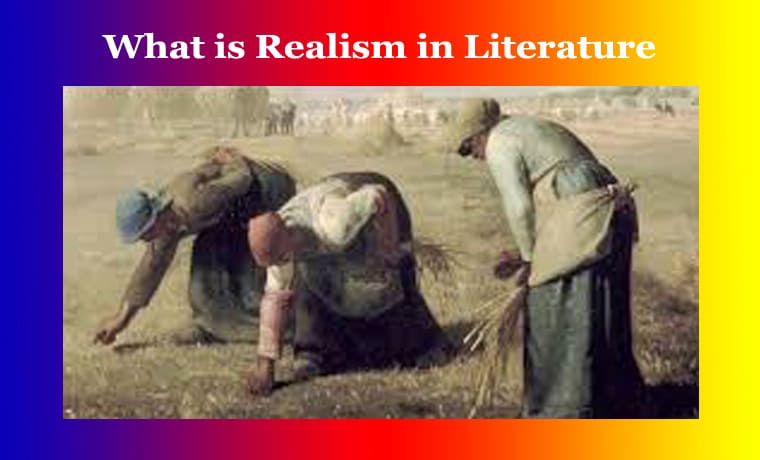
What is Realism in Literature
What is Realism in Literature
Introduction to Realism in Literature:
Realism in literature serves as a lens through which authors portray life as it is, devoid of idealization or romantic embellishments. This literary movement emerged in the 19th century as a reaction to the heightened emotionalism of Romanticism, seeking to capture the everyday experiences of ordinary people. Realism in literature strives for an authentic representation of the complexities and nuances of human existence.
Definition of Realism in Literature:
Realism in literature is a literary movement characterized by a meticulous depiction of reality, often focusing on the mundane aspects of everyday life. Authors affiliated with realism reject the fantastical and idealized narratives of Romanticism, opting instead for a portrayal of life that is grounded in the tangible, the plausible, and the ordinary. This movement seeks to present the world as it truly is, exploring the intricacies of human relationships, social structures, and the impact of external forces on individual lives.
Elaboration of the Definition:
Realist literature aims to mirror reality without distorting or exaggerating it. Writers associated with this movement delve into the minutiae of human experiences, offering detailed observations of social conditions, class disparities, and the impact of industrialization. The characters in realist works are often ordinary individuals facing everyday challenges, and their dialogue and actions reflect the language and behavior of the time and place in which the narrative is set.
Examples of Realism in Literature:
An exemplary work of realism is Gustave Flaubert’s “Madame Bovary.” Flaubert meticulously portrays the life of Emma Bovary, a provincial woman whose aspirations collide with the harsh realities of 19th-century French society. Through Flaubert’s detailed and unsparing examination of Emma’s life, the novel becomes a mirror reflecting the societal constraints and personal struggles of the time.
In the realm of American literature, Mark Twain’s “The Adventures of Huckleberry Finn” stands as a quintessential realist work. Twain’s portrayal of Huck Finn’s journey down the Mississippi River offers a stark commentary on the racial and social issues prevalent in 19th-century America. Twain’s use of regional dialects and vivid descriptions contributes to the authenticity of the narrative.
Conclusion:
Realism in literature serves as a powerful tool for capturing the essence of the human experience. By presenting life in its unembellished form, realist authors create narratives that resonate with readers, providing insight into the challenges, triumphs, and complexities of existence. In rejecting idealization, realism invites readers to confront the raw, unfiltered aspects of society and human nature, fostering a deeper understanding of the world and its inhabitants. 0 0 0.
Realism in Literature: Key Data in Brief
| Topic | Details |
|---|---|
| Definition | A literary movement focused on the accurate and detailed depiction of everyday life and society. |
| Emergence | Originated in the 19th century as a reaction to Romanticism, emphasizing authenticity over idealism. |
| Key Features | – Focus on ordinary characters and real-life situations. – Realistic dialogue and language. – Exploration of social issues like class and inequality. |
| Examples in Literature | – Madame Bovary by Gustave Flaubert: Examines societal constraints and personal struggles. – The Adventures of Huckleberry Finn by Mark Twain: Explores racial and social issues in 19th-century America. |
| Importance | Provides an unembellished view of society, fostering empathy, understanding, and insight into human experiences. |
Frequently Asked Questions on Realism in Literature
1. What is Realism in Literature?
Realism in literature is a literary movement that emphasizes accurate and detailed portrayals of everyday life and society. It focuses on ordinary people and real-life situations, avoiding romantic or fantastical elements.
2. Why did realism emerge as a literary movement?
Realism emerged in the 19th century as a reaction to romanticism. Writers sought to move away from idealized and emotional portrayals, instead attempting to portray life authentically by reflecting the social, political, and economic realities of the time.
3. What are the main characteristics of realism in literature?
- Focus on ordinary, relatable characters.
- Detailed portrayals of everyday events and social settings.
- Use of realistic dialogue and language.
- Exploration of social issues such as class, inequality, and industrialization.
- Avoid romanticized or exaggerated narratives.
4. Can you give examples of realism in literature?
- “Madame Bovary” by Gustave Flaubert: Examines the struggles of Emma Bovary within the social constraints of 19th-century France.
- “The Adventures of Huckleberry Finn” by Mark Twain: Highlights racial and social issues in 19th-century America through Huck’s journey.
5. Why is realism important in literature?
Realism allows readers to connect with authentic, relatable characters and situations. It highlights social issues, promotes empathy, and provides a mirror to the complexities of human existence, providing valuable insight into the human condition.
Some Articles on Literature:
- What is Grey Literature
- What is Tragedy in Literature
- What is a Motif in Literature
- Modern Literature
- Ethos Definition English Literature
- Climax Definition in Literature
- What is Atmosphere in Literature
- What is Satire in Literature
- What is American Literature
- What is an Archetype in Literature
- What is the Literature Review in Research
- What is Exposition in Literature
- What is Modernism in Literature
- What is Characterization in Literature